
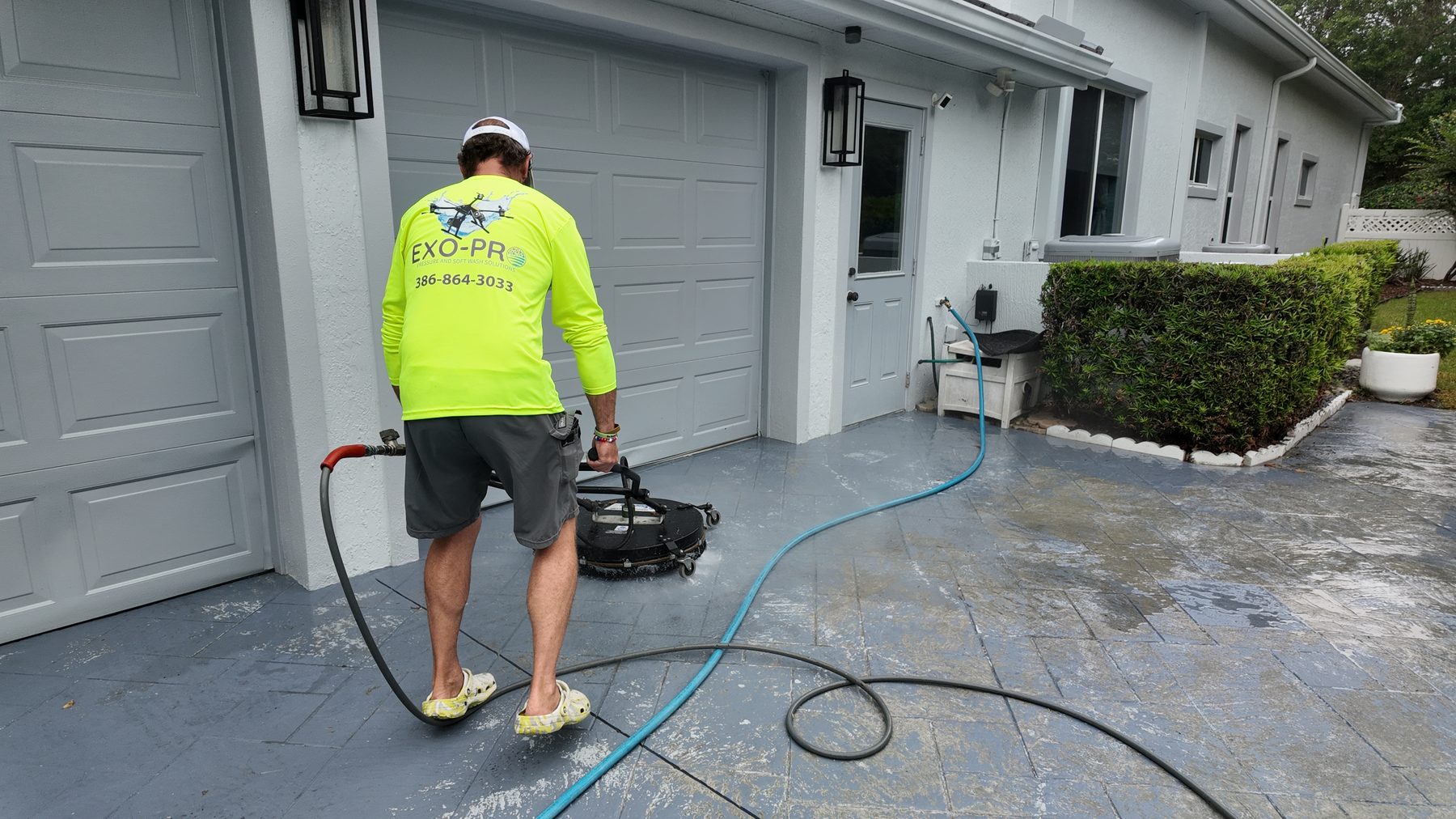
Pressure washing that cleans hard surfaces, safely.
High pressure is the right tool for concrete, pavers, and brick, and the wrong tool for roofs and siding. We use it where it belongs, and never where it does damage.
The right tool for hard surfaces
Pressure washing uses high-pressure water to lift dirt, grime, and buildup from surfaces that can take the force. On concrete, pavers, and brick, it is fast and effective, and it restores flatwork to like-new.
What we pressure wash
- Driveways, walkways, and sidewalks
- Pavers and brick
- Pool decks and patios
- Concrete flatwork and curbing
- Dumpster pads and commercial hardscape
The mistake that damages homes
High pressure belongs on hard flatwork only. On a roof it cracks tile and strips shingle granules. On siding and stucco it forces water behind the surface, where it causes problems you will not see for months. Those surfaces get a soft wash instead. We match the method to the surface, every time.
Seal it to keep it clean
After cleaning concrete and pavers, we can seal them with CitraShield so they resist regrowth and stay looking good longer. It is the difference between cleaning the same driveway every few months and keeping it clean.
Common questions.
Can you pressure wash my roof?
No, and no one should. Roofs are cleaned with a low-pressure soft wash. High pressure damages both tile and shingle.
Is pressure washing safe for my pavers?
Yes, when done correctly. We use the right pressure and technique for the surface, and we can re-sand and seal pavers afterward.
Do you seal concrete and pavers?
Yes. Sealing after cleaning helps flatwork resist regrowth and stay clean longer.
How often should I clean my driveway in Florida?
Most benefit from cleaning once or twice a year, more if it is shaded and collects green growth. Sealing extends the time between cleanings.