Drone Roof Cleaning in Florida: How It Works and Why It Is Safer
If your Florida roof has dark streaks, green patches, or black staining, it is not dirt. It is living growth, mostly algae and mildew, feeding on the roof surface in our heat and humidity. The safe way to remove it is a full soft wash that treats the entire roof without anyone walking on it. Here is how we do that, where the drone comes in, and why this approach is safer for most Florida homes and buildings.
How we clean a roof
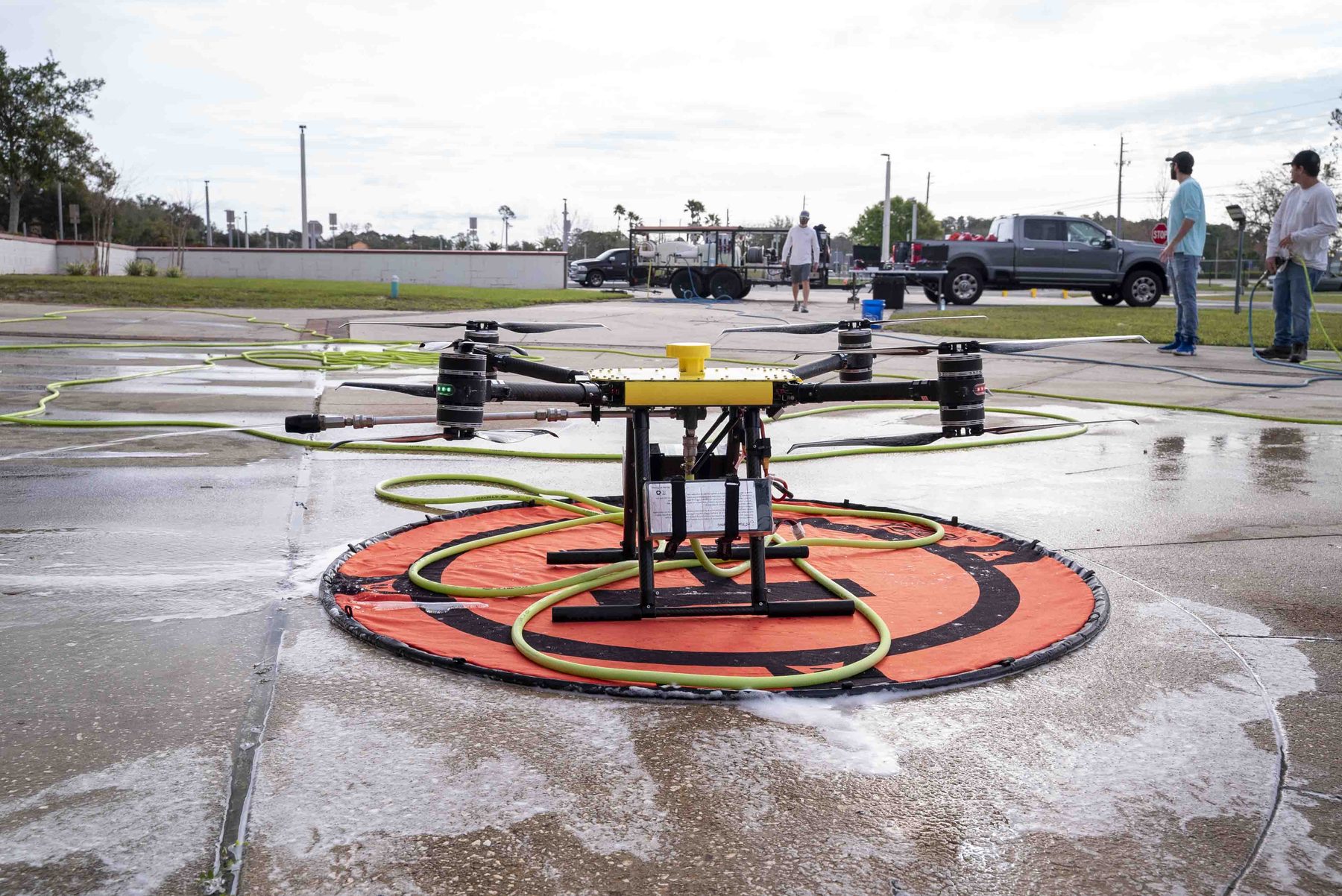
We clean everything we can reach safely and efficiently from the ground and ladders, and we use a professional spray drone for the areas we cannot reach that way. That includes high and steep sections, peaks beyond ladder reach, areas blocked by screen enclosures, and buildings well above ladder height. The two methods together give a complete, even clean without putting a worker on your roof.
The key word is soft wash. Roofs are never cleaned with high pressure. High pressure cracks tile, strips shingle granules, and forces water under the roof covering. A soft wash uses the cleaning solution, not force, to kill and remove the growth. The drone simply carries that same solution to the places that are hard or unsafe to reach on foot.
How the process works
Every roof is different, but the approach is consistent:
First, we inspect the roof and document its condition, including any pre-existing issues like cracked tiles, oxidized shutters, or damaged screens, so there are no surprises later. Then we treat the full roof surface, not just the visible stains. Spot treating leaves streaks and the untreated areas regrow within months, so we clean the entire envelope, working from the ground and ladders where we can and flying the drone for the rest. The solution is left to do its work, and the biological growth dies off and weathers away cleanly over the following days.
We fly only in suitable conditions. Wind is the main limit, and we hold to a conservative threshold so the solution lands where it should and nowhere it should not. Wind direction decides the order we work the roof in. This is the kind of detail that separates a professional operation from someone who bought a drone last month.
Why it is safer than walking the roof
Walking a roof is where the risk lives, for the worker and for your roof. Tile roofs in particular crack easily under foot, and the damage often is not visible until the next heavy rain finds it.
We do not walk tile roofs. Where a section is too high, too steep, or blocked by a screen enclosure, the drone reaches it from the air instead of putting a worker on the tile. That protects your roof from foot traffic and keeps our crew off a wet, sloped surface two or three stories up. It also lets us reach buildings far taller than a ladder would allow, up to roughly 200 feet.
Is it safe for my roof and landscaping?
Yes, when it is done correctly. The solution is a sodium hypochlorite based soft wash, the industry standard for killing roof algae and mildew. It is applied at low pressure and in controlled amounts. We protect and rinse surrounding plants as needed, and the method is designed to be gentle on the roof covering itself, whether that is tile, shingle, or metal.
On many jobs we follow the cleaning with CitraShield, a protective coating that slows regrowth so the roof stays clean longer. For a Florida roof that would otherwise restain within a year or two, that added protection is often the difference between an annual problem and a multi year one.
Why not just spray the whole roof from the ground?
You can reach a lot from the ground, and we do. But blasting a tall roof with solution from sixty feet below sends most of it scattering through the air, with overspray landing on everything below and uneven coverage up top. For the high and hard to reach areas, flying the drone close to the surface and spraying square to it puts the solution exactly where it belongs. Close and controlled beats far and hopeful. That is why the drone handles the inaccessible work rather than a ground crew throwing solution upward.
Which roofs and buildings is this good for?
The ground, ladder, and drone combination fits tile roofs of any height, two story and larger homes, roofs with screen enclosures or hard to reach peaks, and commercial and multi story buildings well beyond ladder height. For a simple single story shingle roof with easy access, a standard soft wash from the ground and ladders is all you need, and we will tell you so. The right mix depends on the roof.
Frequently asked questions.
How long does roof cleaning take?
Most residential roofs are treated in a single visit of a few hours. The biological staining continues to clear over the following days as the treated growth dies off and weathers away.
Will the stains come back?
In Florida, untreated roofs restain over time because the climate never stops feeding the growth. Full surface treatment plus a protective coating like CitraShield slows that significantly, and periodic maintenance keeps a roof clean for the long run.
Is using a drone more expensive?
Not necessarily. For tall, steep, or hard to access roofs, reaching those areas by drone is often more cost effective than the lifts, scaffolding, or added labor and risk that other access methods would require.
Do you walk on the roof at all?
Not on tile. We clean what we can reach from the ground and ladders, and the drone handles the areas we cannot reach safely, so no one walks your tile.